Is France or Germany Cheaper for Pakistani Students? (2026)
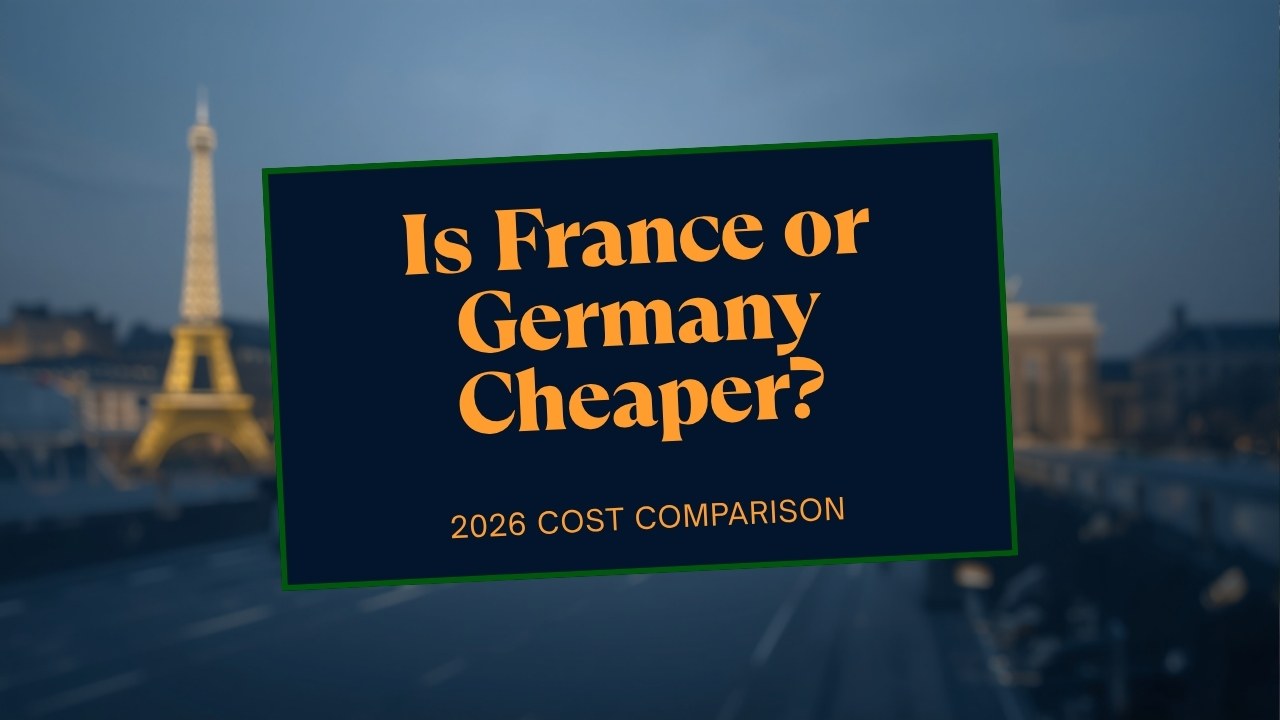
Table of contents
How much is tuition in France vs Germany?
This is where the two countries split. Most public universities in Germany charge no tuition fee for bachelor and master programs, even for international students. You still pay a semester contribution of roughly 150 to 350 EUR, which usually covers administration and a local transport pass. One exception is the state of Baden-Wurttemberg, where non-EU students pay around 1,500 EUR per semester.
France is different. Public universities apply a separate tuition rate for non-EU students: about 2,770 EUR a year for a bachelor and about 3,770 EUR a year for a master in 2026. Some French public universities choose to waive this and charge the lower EU rate of roughly 170 to 380 EUR a year, but you cannot count on it. Private schools and the well-known grandes ecoles sit far higher, sometimes 8,000 to 20,000 EUR a year.
So on tuition alone, a public university in Germany is usually the cheaper starting point for a Pakistani student.
Which country has lower living costs?
Living costs are close, and city choice matters more than the country itself. A student in Munich or central Paris will spend a lot more than one in Leipzig or Toulouse.
As a rough monthly guide for 2026:
- Germany, mid-size cities: about 850 to 1,100 EUR a month including rent, food, and transport.
- Germany, expensive cities like Munich: 1,100 to 1,400 EUR a month.
- France, smaller cities: about 700 to 950 EUR a month.
- France, Paris: 1,100 to 1,500 EUR a month.
France offers one real advantage here: housing aid. The CAF housing benefit can cut a student’s rent by 100 to 200 EUR a month, and international students can apply once they have a French address and residence permit. Germany has no direct equivalent for most students.
Health insurance is another line to watch. In Germany, public student health insurance runs about 120 to 130 EUR a month, which adds up over a year. In France, student health cover through the national system is either free or very low cost after you register.
How much money do you need to show for the visa?
The proof of funds requirement is where students often feel the difference in their bank balance, because you have to show the money before you leave Pakistan.
Germany asks for a blocked account (Sperrkonto). For 2026 the standard figure is around 11,904 EUR for the year, which is 992 EUR a month locked in and released to you in monthly amounts once you arrive. This is a firm requirement and one of the biggest upfront hurdles for Germany.
France asks you to show roughly 615 EUR a month, so about 7,380 EUR for a year, usually through a bank statement rather than a locked account. That lower and more flexible figure makes France easier on paper at the visa stage, even though its tuition is higher.
Here is the trade-off in plain terms. Germany costs less over the full degree but demands a larger lump sum before you travel. France asks for a smaller amount up front but charges tuition every year.
Not sure which budget fits you?
Send us your city preferences and savings, and we will map out a realistic France vs Germany cost plan for your case.
Can you work part-time to cover costs?
Both countries let students work, and part-time earnings can cover a meaningful share of living costs.
In Germany, students can work about 140 full days or 280 half days a year, which works out to roughly 20 hours a week during term. Typical student jobs pay around 13 to 15 EUR an hour. In France, students on a residence permit can work up to 964 hours a year, again close to 20 hours a week, at a minimum wage of about 11 to 12 EUR an hour.
Neither country lets you fund a full degree on part-time work alone, and you should never plan your visa budget around a job you do not have yet. Treat part-time income as support for daily expenses, not as your tuition or proof of funds.
Do you need German or French?
Language shapes both your cost and your options. Germany has a large number of English-taught master programs, especially in engineering, computer science, and business, so you can often study in English at the postgraduate level. Most German-taught bachelor programs, though, expect a B2 level of German.
France has grown its English-taught programs too, particularly at business schools and in master courses, but a lot of public university teaching is still in French. Learning the local language helps you find part-time work and settle in faster in either country, so it pays off beyond the classroom.
So which is actually cheaper?
For a Pakistani student aiming at a public university, Germany is usually cheaper across a full degree because tuition is close to zero. France can come out competitive, and sometimes even lower month to month, if you pick a smaller city, claim CAF housing aid, and land at a university that waives the non-EU tuition rate.
A simple way to decide: if you have savings for the blocked account and want the lowest total cost, lean Germany. If your up-front funds are tighter and you are comfortable paying yearly tuition, France can be the smoother entry.
Key takeaways
Germany usually wins on tuition because public universities charge little to nothing, while France charges non-EU students a set yearly fee. Living costs are similar and depend heavily on the city, though France offers CAF housing aid that Germany does not. Germany needs a larger blocked account up front (about 11,904 EUR), while France asks for a smaller monthly balance (about 615 EUR). Both allow around 20 hours a week of part-time work. Over a full degree, Germany is often the cheaper choice, but France can match it with the right city and university.
Frequently asked questions
Is Germany completely free for Pakistani students?
Tuition at most public universities is free, but you still pay a semester contribution of about 150 to 350 EUR and cover living costs and health insurance, so it is low cost rather than free.
Does France charge Pakistani students more than EU students?
Yes, non-EU students usually pay about 2,770 EUR a year for a bachelor and 3,770 EUR for a master, though some public universities waive this to the lower EU rate.
Which country needs more money for the visa?
Germany, because of the blocked account of around 11,904 EUR. France asks for a smaller monthly balance of about 615 EUR.
Can I study in English in France or Germany?
Both offer English-taught master programs, especially in technical and business fields. Bachelor programs are more often taught in the local language.
Does France really help with rent?
Yes. The CAF housing benefit can reduce a student’s rent by roughly 100 to 200 EUR a month once you have an address and residence permit.
Can part-time work cover my costs in either country?
It helps with daily expenses but will not fund a full degree. Both countries allow close to 20 hours a week during term.
Which is better for staying back after graduation?
Germany offers an 18-month residence permit to look for work, and France offers a post-study period of up to two years, so both are strong for staying on.
Plan your France or Germany application with us
Border and Bridges is a Johar Town, Lahore consultancy independently verified by SECP, FBR, ICEF, and the British Council. We help Pakistani students compare countries, pick the right city, and prepare a funds plan that holds up at the visa stage. Tell us your budget and we will take it from there.